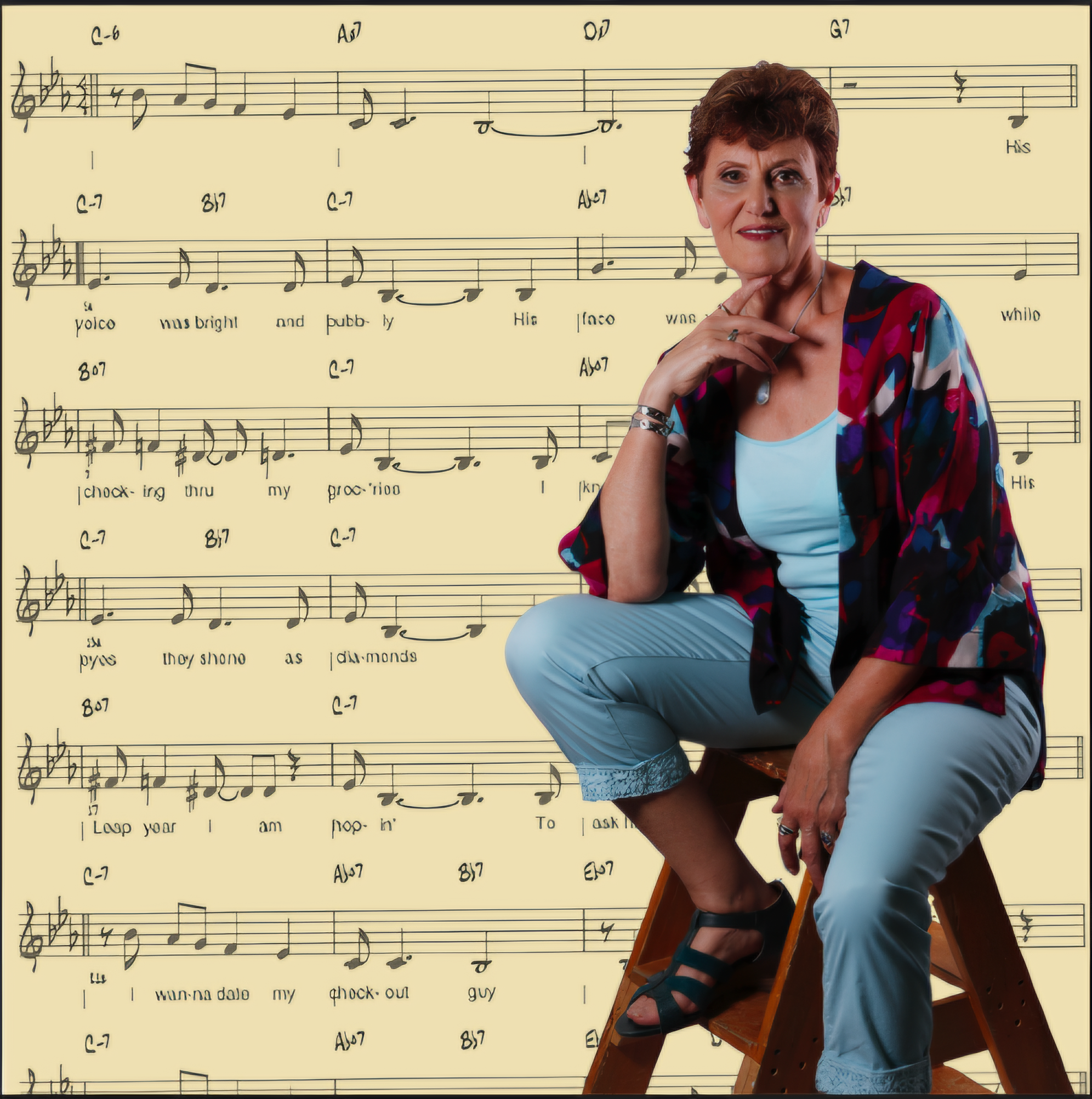

To celebrate New Zealand Music Month, The Courier has caught up with some of South Canterbury’s musical maestros to talk about their journeys and experiences with music. In this final edition, reporter Connor Haley talks with easy listening jazz singer-songwriter Lois May.
Q: Where did your love for music first start and who were some early inspirations?
A: My dad played the violin and had been a boy soprano in his younger years. He took me to a lot of musical movies such as Oklahoma, Carousel, Seven Brides for Seven Brothers and also to some vaudeville shows. Then later I found Ella Fitzgerald singing Cole Porter’s music and fell in love with the style.
Q: When did you first pick up an instrument and start thinking it was a hobby/interest you wanted to pursue?
A: The kids at school were playing ukuleles but as I didn’t have one I used a block of wood and four rubber bands to learn some of the chords. I started piano around nine or 10 and passed my grade 3 theory but really wanted to sing. My parents wouldn’t pay for singing lessons so I had to wait until I went to work at 16 so I could pay myself.
I realised very early that singing classical music was not for me. At the same time I started working at Kircaldie & Stains in Wellington in their record [vinyl] department which is where my love of swing jazz music started.
Q: What are some fond memories you have of performing or writing music?
Some of the best times were in the ’60s and ’70s, when I was resident vocalist at a cabaret in Upper Hutt and then at the Ranch House in Birkdale, Auckland. I also performed at the Woodburn Sergeants’ Mess with a band I met on the night. Singing with these bands were all possible because a dear friend who I had sung with in Wellington, Chuck Fowler, had written all my charts for me.
I wrote my first lyrics when I was 11 to someone else’s music, then lots of love songs followed. Through the ’70s I wrote a lot of hymns. During my time at Jazz School [2013-2015] I renewed my love of writing and put out my first album in 2018 — making all the music tracks myself then recording and having them mixed and mastered in Christchurch at the Nightshift studios.
Q: How important has music been in your life?
A: Music has always been my number one passion in life. I’m always listening to something and my foot is always tapping to a beat even if I can’t physically hear one. I picked up music theory often when I didn’t want to practise the piano but it turned out to be very helpful when I needed to transpose music keys to suit my voice. We had no computers back then, so everything had to be done manually.
One of the hardest situations for me was getting some backing to sing with. I didn’t play any instrument well enough to accompany myself and so initially relied on others or sang a cappella. In the ’80s, with the help of computer software, I started making my own backing tracks and burning them on to a CD so I could do longer gigs without relying on others.
Q: How have you found being a part of the South Canterbury music scene?
A: Coming to live in Geraldine in 2023 I found the music scene very different, mainly as I had been doing regular paid gigs at the retirement villages in Christchurch. In South Canterbury there was a very different view to paying musicians. I know a lot of musicians say they do it because they love it and I do too; however, I also record a lot of songs and that costs money, as does all the equipment we need for our gigs.
Q: Do you feel there is support in the region for local musicians?
Although I had never been busking before until I came to South Canterbury, I have found the regular locals who enjoy the music are happy to give tips.
In Geraldine we have a roster for music at the local Saturday market and in the winter we perform at a local cafe. I have also been active with the Saturday Live musicians performing at Strathallan Corner and the occasional street market in Timaru.
Q: How important is it that people support local music and that local musicians are given a platform to perform?
Quoting Shakespeare — “if music be the food of love, play on”. It is really important that as musicians that we are supported by the locals — musicians don’t want to perform to no-one, but of course we also need somewhere to perform. It can be quite hard sometimes to marry the two together.
Often our gigs are outdoors and therefore subject to the weather. I also sing several of my original songs at my gigs because not everyone listens to streaming platforms and without the opportunity like the Songwriters Showcase our options can be limited and our music goes unheard.
Q: What are you working on now and is there anything else you’d like to add about music or your career?
Since releasing my album in 2018 I have released several singles. I released seven songs in 2024, two in 2025 and was able to sing some at the Songwriters Showcase. Work, unfortunately, has often got in the way of my creative juices and music seems to be the first thing to be put on the back burner.
Losing my husband last year after a sudden illness has also set me back and I still find some lyrics hard to sing. However, I feel I now have my mojo back and apart from rewriting his goodbye song to make it more universal, I’ve also written two other songs that I plan to record soon. I want to keep writing and singing for as long as my voice and health allows.