The last temporary exhibition at the South Canterbury Museum’s Perth St building opened last week.
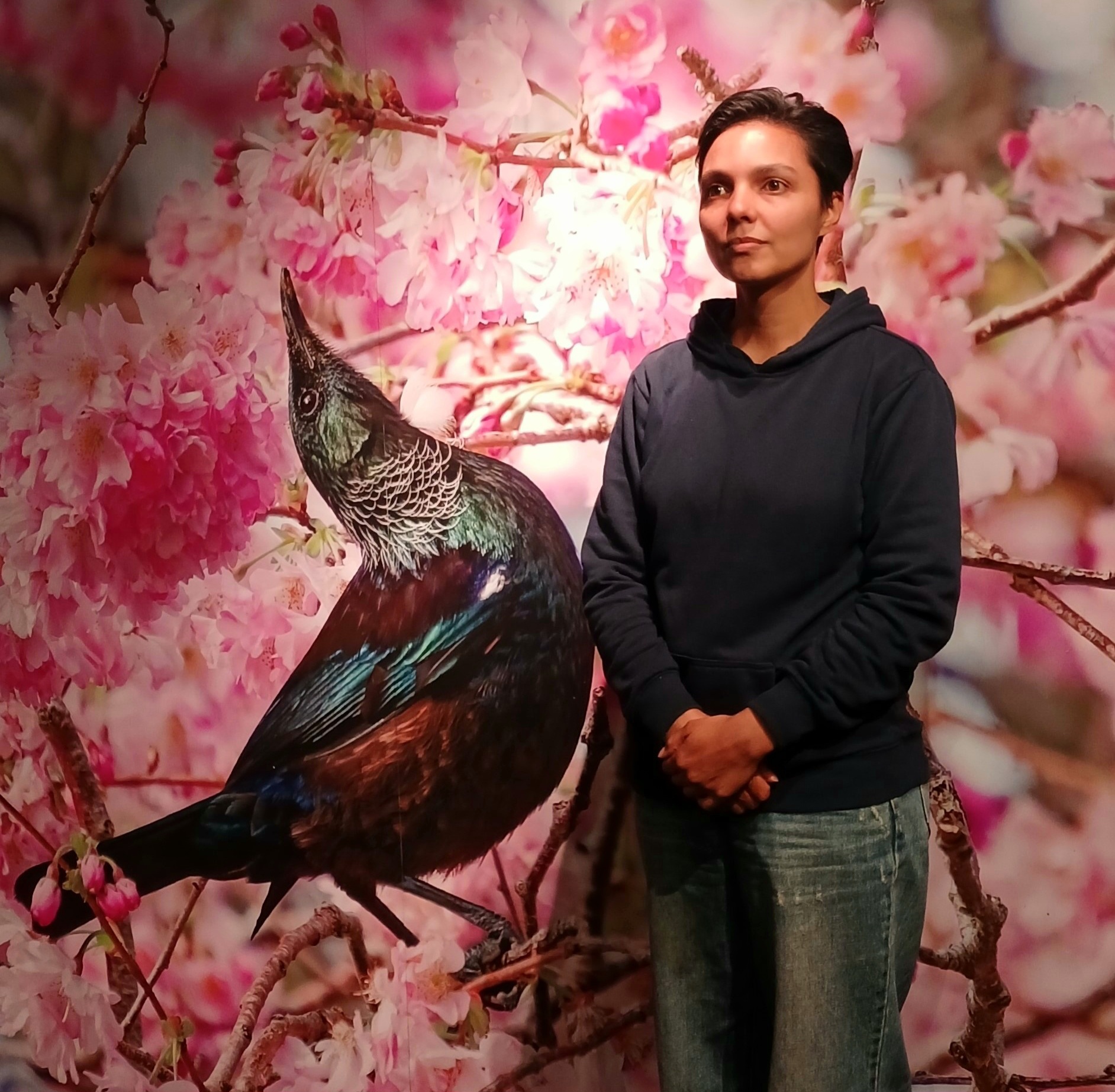
‘‘In Our Backyard’’ is an exhibition featuring fine art photography by Zenobia Southcombe, of Dwindle River Studio in Palmerston, North Otago.
The exhibition, which has a focus on wildlife that can be found across both North Otago and South Canterbury, opened last Thursday and will be the last held at the museum before its closure in mid-July to prepare for the scheduled opening of its new premises in Barnard St next year.
Southcombe said she had been contacted about doing an exhibition at the South Canterbury Museum last year.
‘‘I don’t think I could have said ‘yes’ quick enough. My work is obviously all about the natural world, so the museum is in perfect alignment, not just with my work, but with my values as well.’’
After moving to Palmerston from Auckland in 2019, she said her time in lockdown played a big part in inspiring her artistry.
‘‘My plan was to use my camera to explore my new place, and then we locked down. My garden became my subject because it was basically the only place that I could go and I think that was actually the best thing that happened.
‘‘It meant that I had to look more closely at what I had and there was so much there that I didn’t know existed, even after a year or two of living there.
‘‘Photography really brings out, for me, the fairy-tale magic of nature. There’s dragonflies, butterflies and all these little things that when you see them up close through a camera, they look absolutely beautiful and stunning.’’
She hoped after seeing the exhibition that people would go out for themselves and look a little more closely at the beauty of nature.
‘‘There’s all these little details that we can’t see with our eyes. What I see with my eyes is not what I see through the camera.
‘‘The camera can get closer, it can get more details, it can capture action that’s too fast for us to track.
‘‘So even when I go back and see these animals that I have photographed, I see them as more beautiful than when I saw them before.’’
Southcombe said she often explored different ways of making a photograph, including using the historical process of cyanotype printing.
‘‘I think one of the things I love about it is the process for cyanotypes now is pretty much exactly the same as it has ever been.
‘‘It was discovered in the 18-somethings and it’s two iron salt solutions mixed together in what’s called a dim room, rather than a dark room, and then coated on paper.
‘‘Once it’s exposed to the sun, it starts to turn a lime green colour and then that slowly turns blue and then grey. Then you wash it off and it becomes this beautiful Prussian blue.
‘‘What’s awesome about it but also terrible is that you use the sun to expose, so if I have like five cloudy days in a row, I can’t do much. It’s a nice, slow, hands-on process.’’
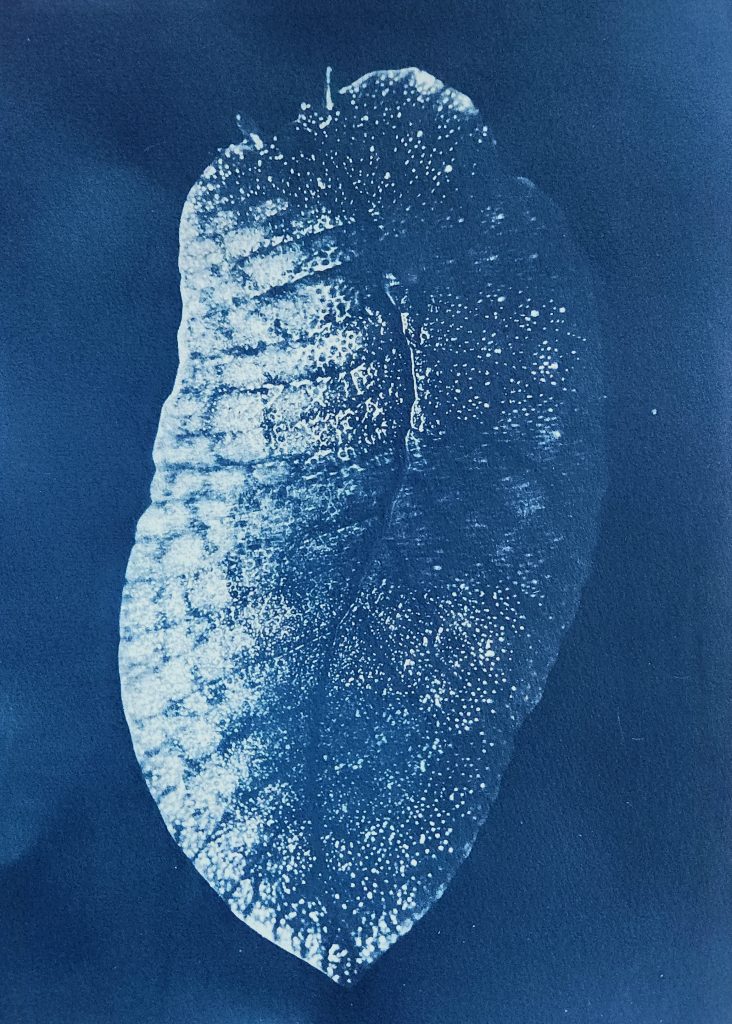
One of the pieces in the exhibition she highlighted was an image of a leaf-veined slug which she had titled Night Wanderer.
‘‘If you look at it top down it looks like a leaf with veins on it. I really wanted to include an image of one but I didn’t have a good photo until a couple of months ago when I found a whole colony of them on my front porch.
‘‘I was very excited that I managed to get a decent photo of that into the exhibition and that was using the cyanotype process.
‘‘Through the editing and the cyanotype process, there is a bit of a Starry Night quality to that particular piece as well.’’
South Canterbury Museum director Philip Howe said he had really enjoyed collaborating with Southcombe for the exhibition.
‘‘We love playing with big images, so I was quite pleased Zenobia was able to provide me with digital files where you can get those 2m high images because they take on a whole new character when they’re enlarged like that.
‘‘It’s been a wonderful thing to be able to work with Zenobia to portray her artworks, which incidentally are also all for sale.
‘‘The key thing for me is it hasn’t been a massive amount of work on our part, simply because we’re trying to devote all our energy to the new building, as much as we can.
‘‘For us as a museum team . . . there’s a certain poignancy that this will be the last show that we’re putting on in that central space.’’
The exhibition is open now and will run until mid-July.