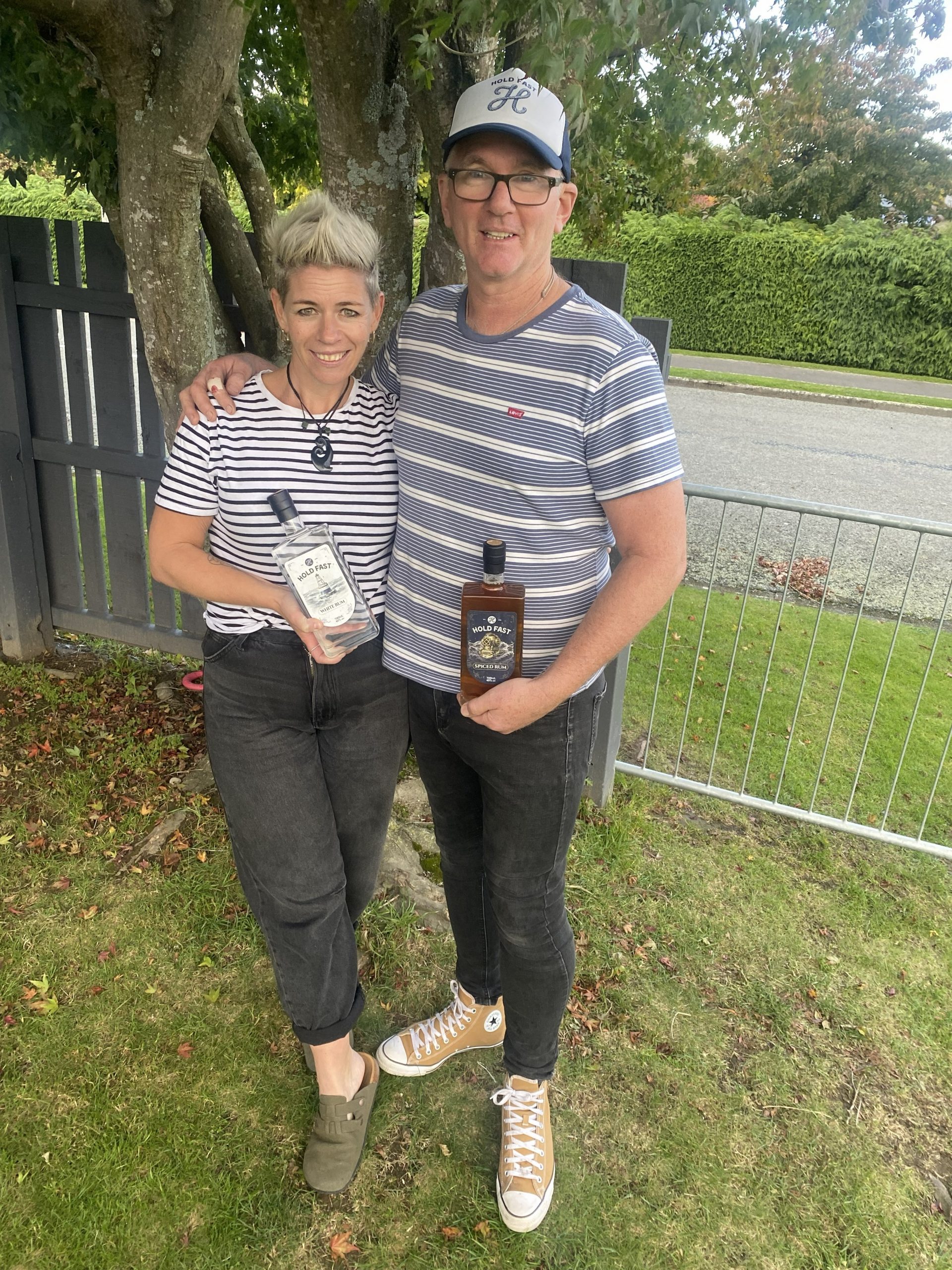
A Geraldine rum-maker’s heart has taught him how to hold fast.
When Al Bolland suffered a heart attack at a Woodbury School camp on Valentine’s Day last year, there were moments when the people around him were not sure he would survive.
Of the 2000 people having an out-of-hospital cardiac arrest each year, only 25% had a pulse when they arrived at the hospital, and only 11% of patients survived.
As he recovered from the ordeal, a friend stopped by and the two men decided to make a batch of whisky to drink on his 60th birthday when he was ‘‘out of sniper’s alley’’.
‘‘Snipers alley’’ was how Mr Bolland had discovered people described their 50s, as it was said to be a high risk time for major health issues.
While he had set that batch aside, with half a decade to go before that special birthday, he discovered rum.
He said he got ‘‘crazy into it’’.
He said while you could distil spirits in New Zealand, it was illegal in other countries.
He had gone down ‘‘just your standard rabbit hole’’, searching up information on YouTube, and joining groups of like-minded individuals on Facebook.
His heart attack had reminded him that life was short, and he had wanted to create something that was lasting.
However, when he hit the perfect recipe, he wondered if it was time to invest in a distillery, and asked his wife Anna Bolland for feedback.
The couple had a solid history of working together, creating Geraldine’s popular Running Duck Cafe a decade ago.
After they had sold the cafe, Mr Bolland went on to create a hot sauce company before moving on to work in research and development for a local food manufacturing company.
Mrs Bolland said she had reminded him he had a ‘‘fabulous job’’ and she had a ‘‘fabulous business’’, and they had made the decision to contract manufacture the tipple.
While many people had distilled their own spirits, Mr Bolland said ‘‘the hard bit is getting it in a bottle’’.
Compliance, labelling and barcodes — it all had to be mulled over.
And then there was the name. The couple chose the old sailor term, Hold Fast.
He said when a ship hit stormy weather they would sit it out, which he felt resonated with him after his health issues.
Mrs Bolland said it was a reminder to ‘‘get back up when the going gets tough’’.
The couple did not want cliche skulls and crossbones on their labelling, so there was a subtle nod on the back of the bottle to the tattoo that sailors got on their knuckles.
‘‘We really enjoy doing something together, and bouncing ideas off each other.’’
He said he often checked with his wife to see if an idea was ‘‘sensible or not’’.
Mrs Bolland said the problem with business was you would not know if an idea was lucrative or not if you did not risk it.
Mr Bolland said while people worried that things might be tough, after his ordeal he had a ‘‘pretty high bar of how bad it can be’’.
When his wife complained of sore muscles from the gym — theatrically complaining that she felt like she was going to die — he liked to remind her of what that would actually feel like.
While it was still early days for the rum label, and the duo had not had time to reach out to bottle stores in the area to stock it, it could be ordered online.
For locals wanting to find it in a bricks and mortar store, it was being stocked in Geraldine’s House of Hop, which had it behind the bar.