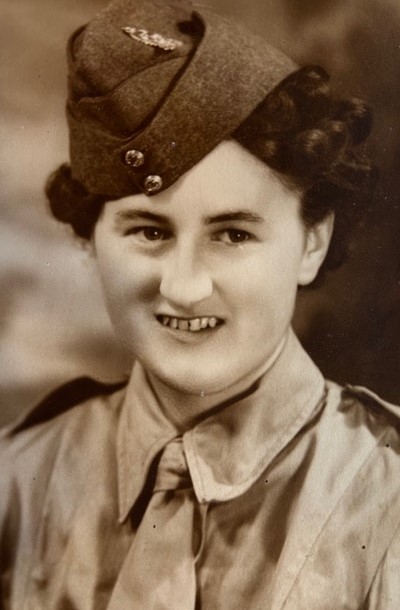
A project by the South Canterbury Genealogy Society is ensuring the stories of the men and women from South Canterbury who served in World War 2 are preserved and remembered. As the project progresses, society convener Liz Shea will be sharing some of these stories with The Courier. Ahead of Anzac Day this week, we remember Joyce Phyllis Stewart nee Andrew.
Joyce Phyllis Andrew was born January 2, 1920 in Christchurch to Philip John and Alice Ann Andrew.
The family moved to Ashburton when Joyce was about 5 and she had three older sisters and one brother who had died of measles aged 7 months.
She attended Tinwald school, then Ashburton High School before completing the fifth form in 1935 as a boarder at Timaru Girls’ High School.
After leaving school she lived at home with her family helping with the housework and working towards her exams on the piano.
On November 29, 1940 an Ashburton newspaper announced that Joyce was about to begin a 60-hour training course at Ashburton Hospital run by the Red Cross.
She continued working on the Red Cross exams, completing her advanced home nursing in June 1943.
As a Voluntary Aid and Red Cross member she applied and was accepted for active service in September 1943.
Joyce enlisted on November 15, 1943 and transferred to Waiouru for final pre-service training.
She embarked for Italy on Maunganui in May 1944 landing at Bari on June 30, 1944 and from there she was transferred to the No 3 New Zealand General Hospital.
Joyce was allocated to the library, managing book issues and going around the wards meeting the patients.
Eventually she got to work in the wards especially near the end of her service.
She was elected canteen secretary for a while and then canteen president.
She accepted a raise to the corporal’s pay rate in 1945.
Joyce was a conscientious yet fun loving person — mixing lots of extra responsibility alongside lots of opportunities for socialising with personnel from the other Allied forces.
Life in Italy consisted of the routines of shift work interspersed with leisure activities during periods of leave.
By cadging rides with army personnel, it was possible to do a great deal of sightseeing of Italy.
Joyce and her companions managed to travel to Rome, Florence, Milan and Naples.
She really enjoyed the opportunities she got to go to operas and hear concerts as she had already developed a love of music.
At the end of the war as the hospitals were closing and winding down, many of the nursing a medical staff were faced with long delays to return home as shipping had to be arranged.
The army arranged for special leave to be granted to waiting personnel to go to the United Kingdom where they stayed at transit camps at Calais and Folkestone with 14 days leave.
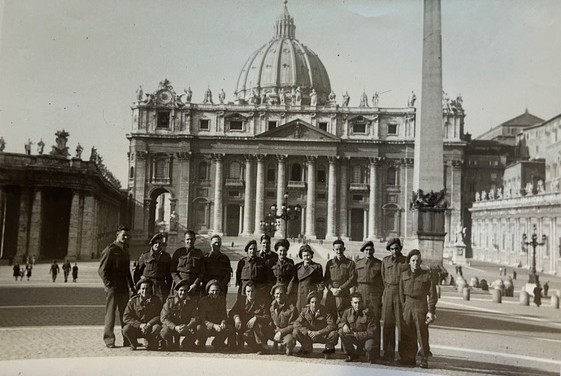
They were issued with train passes and were given free accommodation in the various hostels provided throughout the UK for army personnel.
Joyce calculated that she was able to make the whole trip from London up to Scotland and then coming down through Wales and back to London for less than £20.
Eventually she was lucky enough to get on Orion, returning on January 9, 1946.
She returned home to live with her married sister on the Eiffelton farm, her father having passed away in 1945 while she was overseas.
Her mother had died before she enlisted.
After the war she met up with her future husband Alex Stewart in Hāwera.
The pair had met before the war, prior to Alex enlisting in the air force to go to the Pacific Theatre and serve there.
Their engagement was announced in 1946 and they were married in Ashburton in 1948. As both her parents had died, her sister Rona Elsie Laing sent out the invitations to the wedding.
With Alex working as a bank manager, the family shifted around the North Island with each promotion.
The couple had two children and in 1967 after a long illness Joyce died in Stratford and was buried in Waikumete Cemetery.
Her war service was recorded in her death notice but not on her gravestone.
Alex was buried there in 1990. He never remarried.
Joyce kept in touch with some of the women she met while overseas and the friendships lasted a lifetime.
For Joyce this was one of the highlights of her life and she would have loved to return to some of the places where they visited but unfortunately this did not occur.
It did help her to decide that her future after the war war lay in marriage and motherhood rather than seeking to enter a nursing career.