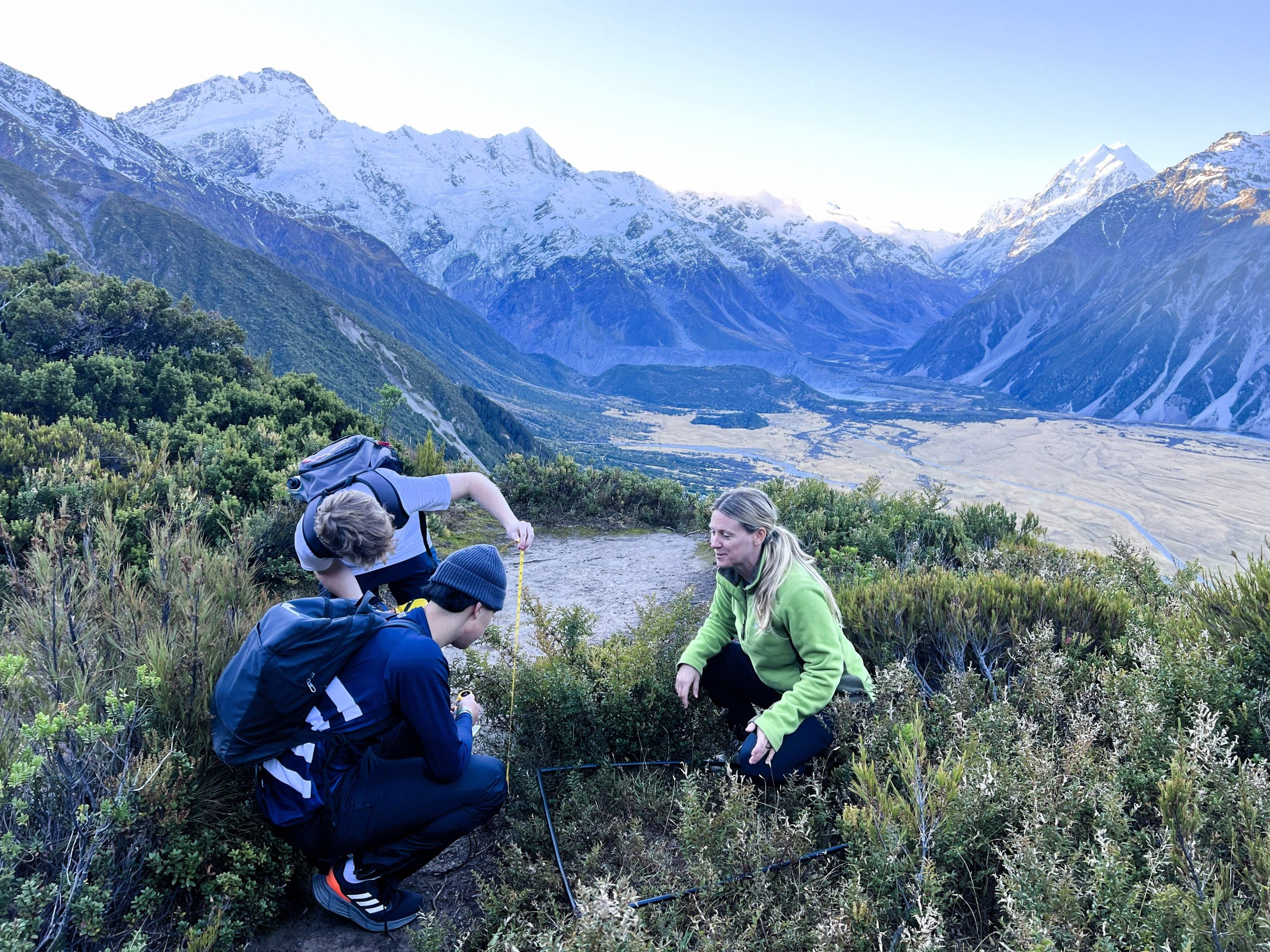
In what is described as the highest classroom in New Zealand, Department of Conservation (Doc) ranger Lisa Winterfeldt sits 1200m up a mountain to teach a group of year 12 students.
The boys are from an Otago Boys’ High School geography class and are looking at how landscapes and plants change over time and at altitude.
‘‘You can look at this in books, but when you see how dramatic the changes are, how the glaciers move and the different plant species, the students are blown away. When we walk up to Red Tarns, you’re looking straight out at Aoraki, which is stunning,’’ Ms Winterfeldt said.
As a new community ranger at Aoraki/ Mount Cook, the former teacher is now delivering a Doc education outside the classroom (EOTC) programme, funded by the Ministry of Education, to students from all over New Zealand.
‘‘Some of them have never seen snow before, let alone walked 1200m up a mountain. Nature is an amazing classroom. It’s a real hands-on experience observing, taking photos and testing their classroom theories and knowledge. New Zealand is geographically very unique,’’ she said.
Otago Boys’ High School head of social science Sam Bradbury-Leather said Aoraki/Mount Cook was a fabulous place for learning how different plants adapted and survived in alpine environments.
The year 12 geography classes were studying ecological patterns, and the students gathered data on percentages of plant species coverage at different zones and the basic principles of how things changed with altitude.
‘‘The Doc team did an awesome job of engaging the 44 students on a huge range of geographical issues in the Aoraki National Park area. It is a stunning setting to use the outdoors as a classroom and students are now perfectly set up to complete the write up of their research reports,’’ Mr Bradbury-Leather said.
Ms Winterfeldt said it was an opportunity to give the students an understanding of how native species evolved over time and how vulnerable they were to introduced predators.
‘‘I talk to them about how we all need to understand the state of nature here and take some ownership of the issues our native species face with introduced predators, for example. I want to inspire them to get out ‘naturing’ — this is a first experience for some of them, and I know they’re very keen to do more.’’ — Allied Media