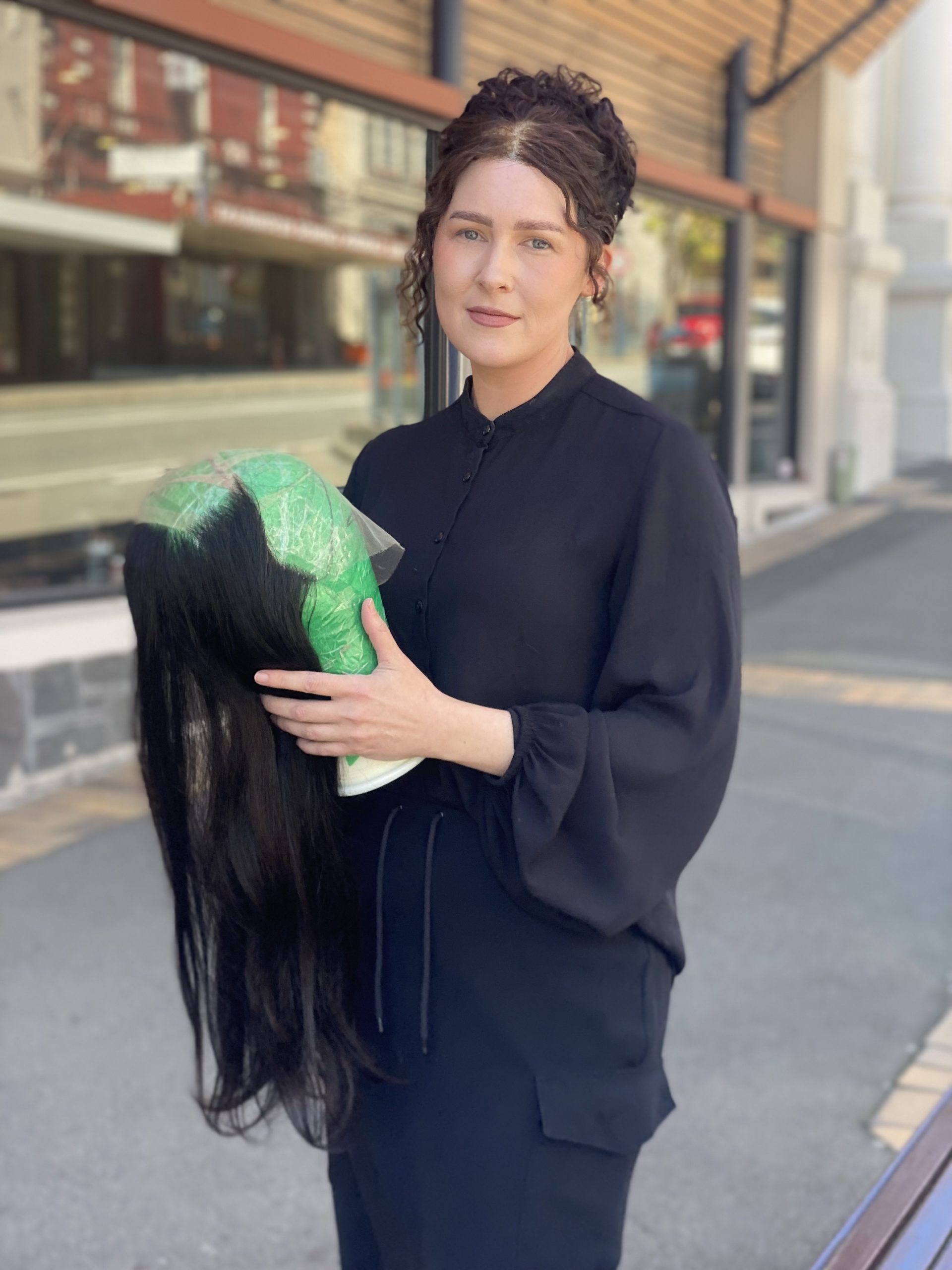
A Temuka-based wigmaker has found an ethical way to source hair.
When Leona Robinson asked — on a Facebook community page — for hair donations in exchange for a $120 bespoke hair cut, she was ‘‘inundated’’ with offers.
While Robinson had worked in Australia at fashion shows, and in film and television, she was now working as a mobile hairdresser as she studied the art of wig-making.
While she was expecting some response she said she was ‘‘bombarded’’ with support and offers.
Robinson could only take donations of ‘‘virgin hair’’, which was basically hair which had not been chemically processed with colours, bleach or perms.
She was hoping to be donated grey hair as well, but it needed to be long enough, with a minimum length of 20cm.
While there was an option to purchase ‘‘semi-affordable’’ human hair overseas, she said it opened a can of worms when it came to ethics.
How could she know if the donor had felt they had been compensated fairly? And with caucasian hair it could be sourced from human trafficking or sex slavery.
While it arrived in the mailbox, ‘‘you have no idea where it has come from’’.
She had been hair dressing since 1998, but along the way she had started to struggle with a form of alopecia.
Through her childhood she had a thick head of hair, but it had started to thin out.
At first she had used a scalp spray which could cover the hair loss, but — as it clogged the pores — it caused more hair loss.
‘‘When it happens to you it is the most alarming thing.’’
She was heavily involved in Australia’s fashion week, and behind the scenes in Australia’s Next Top Model, and had been educating hair dressers on curly hair cutting, yet she was needing to learn again.
She said once you dive into the world of wig wearing you could ‘‘get lost’’.
‘‘It is how it frames the face, it should look like an organic part of you.’’
A cheaply or badly made wig sat on the head like a hat . . . and there was the risk the hair had been sourced from drainage pipes.
While it had been chemically cleaned, and coated in silicone, it was no longer ‘‘cuticle aligned’’ which meant after one or two washes it could become a matted mess.
‘‘You wonder what could go wrong, well that’s what can go wrong.’’
She said wig-making was a very small community, but the biggest secret of all was where hair was sourced from.
‘‘No-one can take my vendor from me, because I am my vendor.’’
Human hair was wigmakers’ gold ‘‘and probably the same value too’’.
She hoped to raise awareness for the Cancer Society’s freedom wigs, which could be donated too on the website, as she said she would not like to take business away from a good cause.
While people would happily pay for fake eyelashes, eyebrow tattoos, tummy compression pants, push up bras, and a long list of other things, she said people with hair loss were expected to ‘‘suck it up’’.
‘‘Especially men.
‘‘That’s why I do it, giving people their dignity back.’’