A former South Canterbury athlete has won big at the 63rd Halberg Awards.
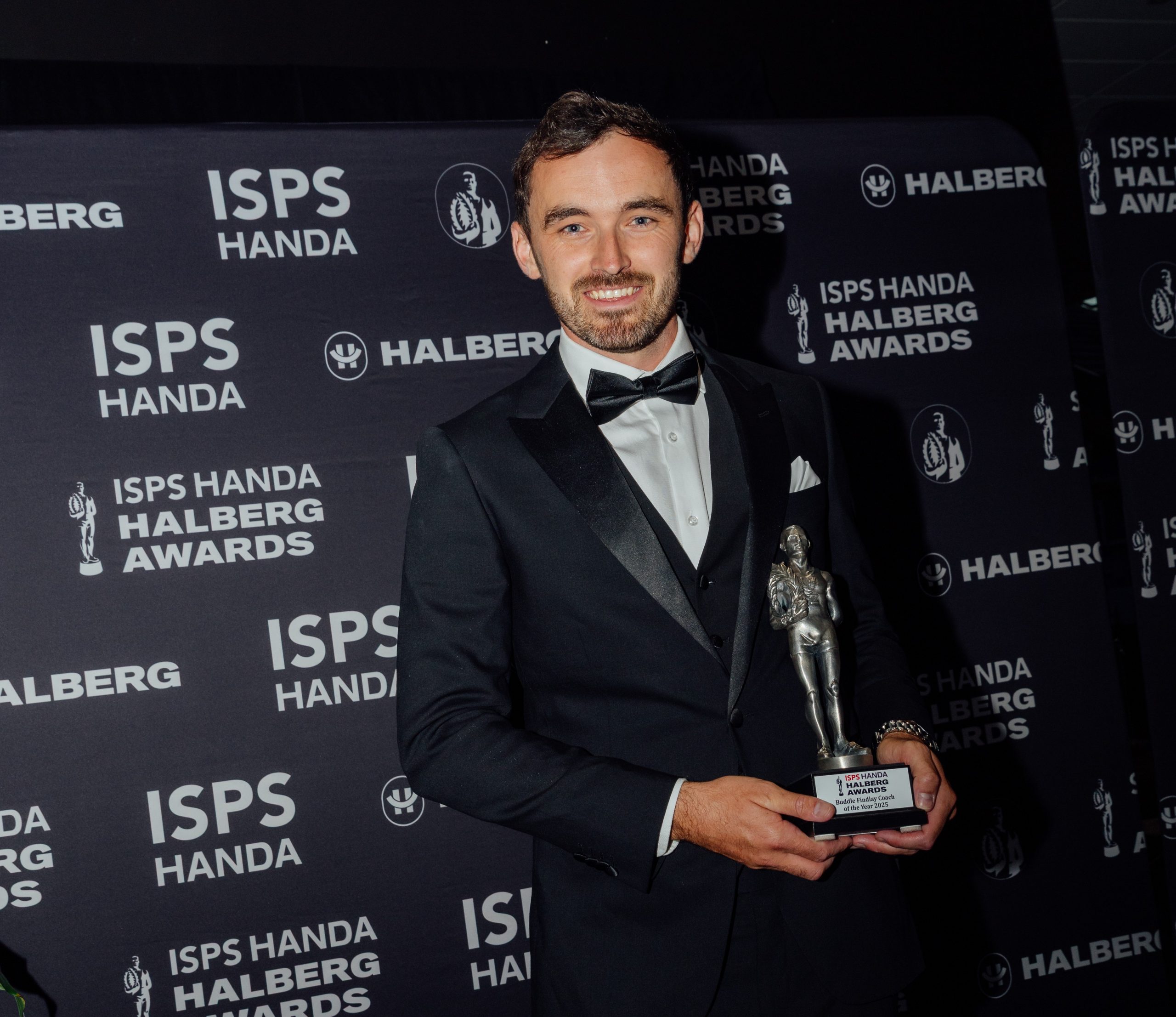
James Sandilands has been named the Buddle Findlay Coach of the Year after successfully leading high jump athlete Hamish Kerr to the top of the athletics world.
He became Kerr’s lead coach less than a year out from the 2024 Paris Olympic Games, where he ultimately guided Kerr to the gold medal.
The feat was backed up last year, when Kerr won the Diamond League final in Zurich and claimed gold at the World Athletics Championships in Tokyo.
Sandilands began his athletics career as a child in Invercargill but really got stuck in after moving to Timaru when he was 13 and joined the South Canterbury Amateur Athletics Club.
He said he thoroughly enjoyed his time as part of the club.
‘‘That was around the time Tom Walsh was just finishing high school, so there was an awesome group of athletes and coaches around him. There were plenty of role models to look up to and see.
‘‘The track was so accessible for us back then, we had a group of about seven or eight girls and boys that just got stuck in on a Saturday. We had a lot of fun and eventually started training together.’’
He said one of his early athletics mentors in South Canterbury was Grant Lord.
‘‘Grant really opened the door for us and was basically a big guiding figure. He certainly was a great coach, but more than anything, he gave us a place and an environment where we could just thrive and have a lot of fun with the sport.
‘‘Ian Baird was another and they just gave us plenty of guidance and structure as we started to compete. I was doing high jump and hurdles with Grant and did all right with both of those when I was around 16-17.’’
His work with Lord was what eventually got him into coaching.
‘‘I was always really interested in coaching and I think with Grant, his perspective on understanding people — he was a police officer himself — kind of came at it from this perspective of people first and building really good relationships.
‘‘I started to learn more about coaching and studied sport science when I left high school and with those sort of careers, you never really know where they’re going to go.’’
He initially ended up in strength and conditioning and performance analysis type roles while still competing in athletics himself.
Eventually it got to a point around 2020 where he was coaching more than he was training.
Sandilands said he began to enjoy the sport more through a coaching lens.
‘‘My favourite part of athletics was the challenge of problem-solving different events and different ways to train. Coaching obviously lends itself more to that as you are able to experiment with lots of different athletes.’’
While there had always been a dream to be an employed coach, he said he never could have imagined things to have worked out the way they did.
‘‘There’s not really a career path laid out for coaching. It’s pretty funny how things can evolve quite quickly, as you’re always just trying to learn more and grow each year and then all of a sudden you stop and look back at where you’ve got to. It’s quite rewarding.’’
He said it had been great to work with Kerr and build on an already existing relationship.
‘‘I’d known Hamish for a good six or seven years before and we had competed against each other when we were younger. I had been a part of his coaching team for the last two or three years, working with Terry Lomax and then from a sports science point of view.
‘‘The opportunity to lead his campaign and coach him came up at the end of 2023 . . . we were able to travel together, and we quickly built a really strong relationship and understanding of the event itself.
‘‘He was obviously a very, very good athlete at that stage, so it was just about refining and getting everything happening at the right time of the year and were were able to do that twice in 2024, one of those being Paris.’’
He was very grateful to have been named Coach of the Year.
‘‘I was just honoured to get that nomination, I think there’s always a certain amount of honour to be nominated alongside some of the other fantastic coaches and just kind of look at what they’ve done for the year.
‘‘I was nominated the year before and you don’t know how those things are really judged, especially being a non-Olympic year. There’s often a lot of other sports that pop up.
‘‘To be able to win it is really cool. It’s nice to be able to stop and reflect and it gives you a bit more fuel to keep pushing on for the next thing and you never know, maybe we’ll be back there again next year.’’
Sandilands said a big focus for 2026 would be trying to break the 2.40m barrier.
‘‘It’s going to be about height more than competitions, in some ways. We’ve got a Commonwealth Games in there but I think the challenge is to redirect our energy towards the next height target.
‘‘We’re currently in the process of trying to understand what that will take. We’ll be spreading our energy across the year and picking and choosing the competitions we think are the best ones that we can jump really high in.
‘‘We’re really looking forward to it as a team. It’s a slightly different challenge but the same problem in a lot of ways and we’ll just keep trying to figure it out as we go.’’