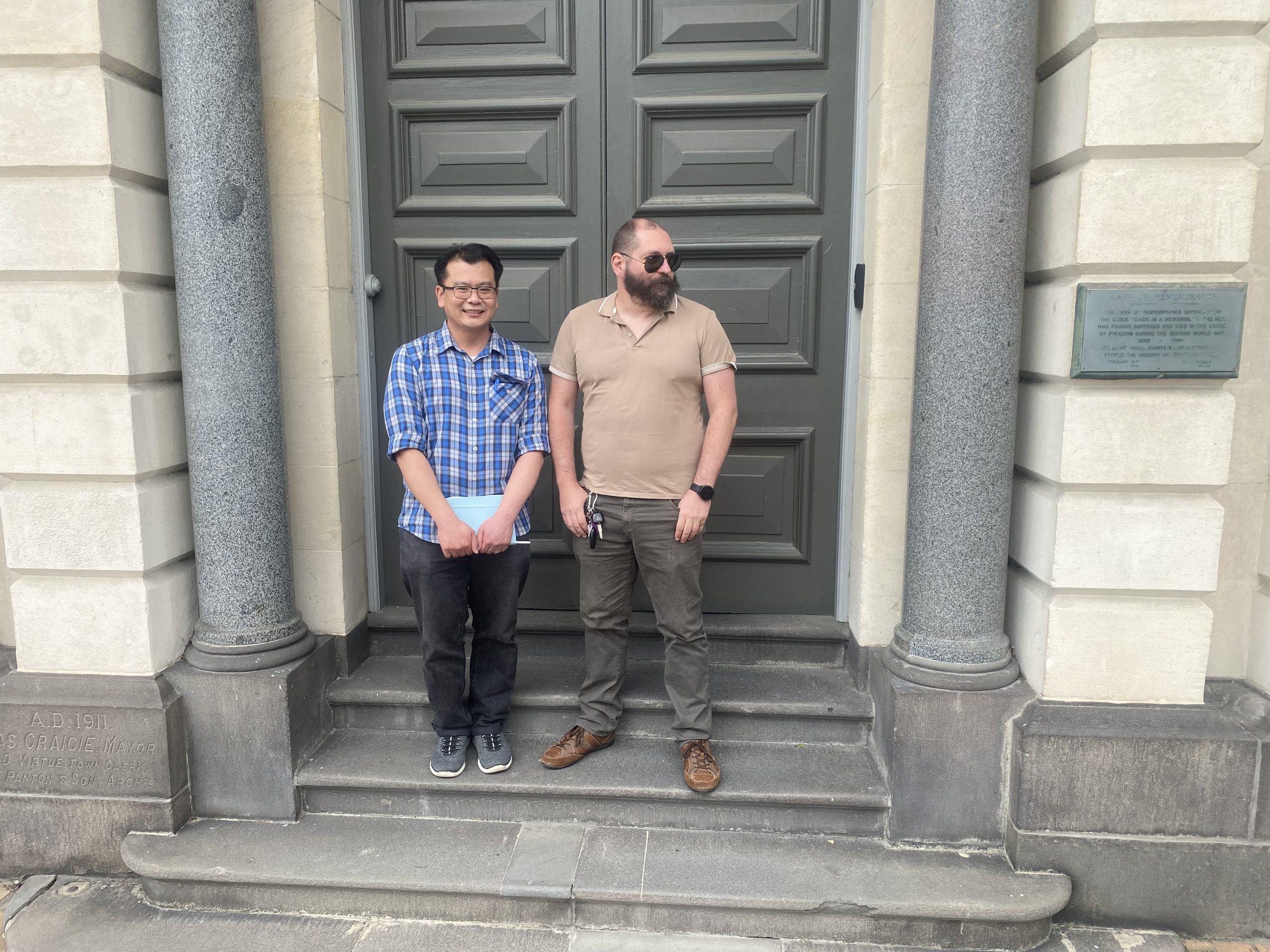
A tech startup created in Timaru has the backing of a national programme.
Gems, co-founded by Kenny Au and Manuele Messeri, was named one of 12 start-ups nationwide in this year’s Ministry of Awesome Founder Catalyst programme.
The Ministry of Awesome Founder Catalyst is a pioneering programme designed to support and accelerate the growth of earlystage start-ups in New Zealand.
It is a six-month initiative that focuses on hands-on learning, real-world application and expert guidance.
Chief innovation officer Zach Warder-Gabaldon said Gems was the first company from Timaru to be admitted into the programme.
The programme had 300 companies under its brand, and only 54 were not based in Auckland, Christchurch, or Wellington, Mr Warder-Gabaldon said.
‘‘Since October 2020, our companies have raised over $207 million and created more than 800 jobs.’’
Of those companies, 28% had raised private capital and only 11% had become defunct, he said.
Mr Au was born in Malaysia and Mr Messeri in Italy, but both had ended up in Timaru.
Mr Au said they worked well together as they came at a problem from two different angles.
Just as Italians created spaghetti with inspiration from noodles, he and Mr Messeri were able to create a modern platform ‘‘born from today’s manufacturing and utility asset challenges, designed to shape the future of the industry’’.
The pair both wanted to make Timaru the kind of place their children would not have to leave once they left home.
Mr Messeri and his wife travelled to New Zealand 20 years ago on their honeymoon, but they liked it so much they cancelled their return flight.
The couple were living in Queenstown when they decided to become parents.
But that big change required them to live closer to a hospital.
Timaru had a hospital, a port, a major railway and a highway.
Mr Messeri said New Zealand once competed broadly in manufacturing, but today the sector was ‘‘increasingly limited to niche markets’’.
It was held back by reactive management, outdated infrastructure and rising costs, he said.
And — in particular — the ‘‘fail then fix it’’ mode.
It was frustration with those problems which inspired the duo’s startup.
Mr Au said while manufacturing moved to modest growth in early 2025, large parts of the industry remained fragile, uncompetitive and underinvested.
‘‘All while critical infrastructure still follows a reactive ‘wait for failure’ model.
‘‘It’s frustrating and it doesn’t have to be this way.’’
The pair had developed a next generation asset management platform that integrated directly with core management systems.
‘‘Using Big Data, IoT and large language models, the platform gives businesses realtime visibility and predictive insights, helping them fix problems before they happen, not after.’’
They were ready to run pilot programmes, and partner with utilities and commercialise the solution, he said.
‘‘If you’re frustrated by infrastructure failure and the costs they bring, now is the time to support something that actually works.
‘‘Every power outage, delayed shipment or uncompetitive product is money lost, and stress added to everyday life.
‘‘Innovation is offering proactive, predictive infrastructure and manufacturing that can save New Zealanders money, time and frustration and prevent the next crisis before it hits.
‘‘World class innovation can come from anywhere, even Timaru,’’ Mr Au said.