Excitement is building as the new South Canterbury Museum space has begun to take shape.
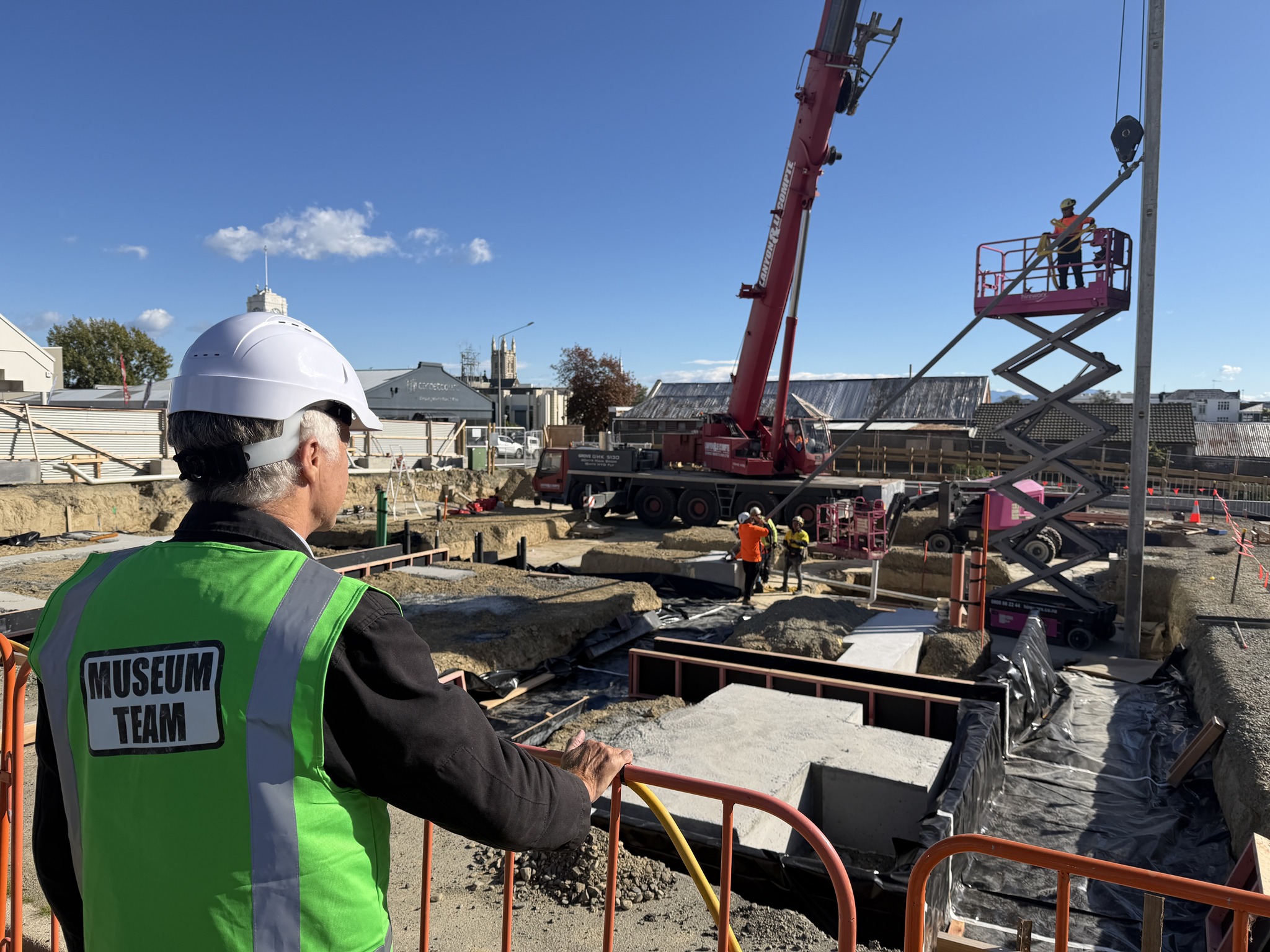
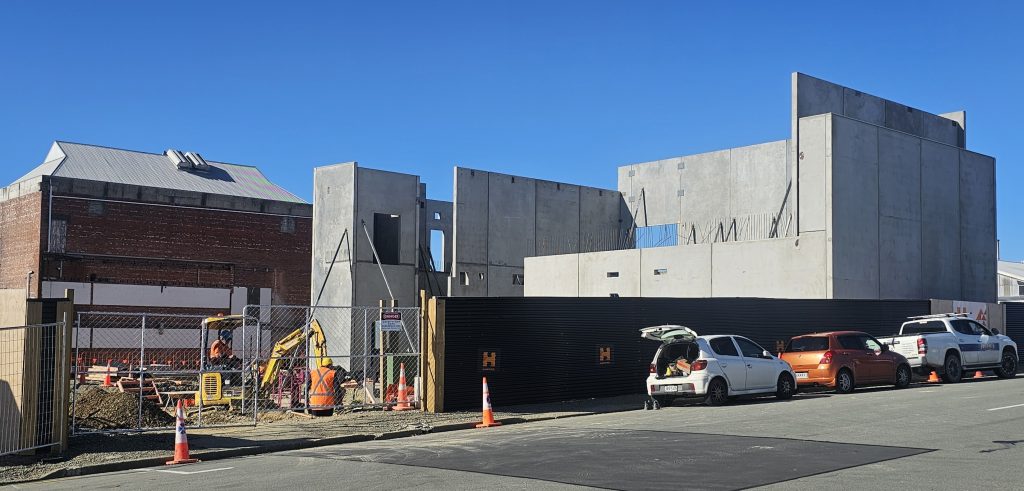
Last month, the first vertical concrete panels of the new museum building went up in Barnard St as part of the combined $47 million Theatre Royal redevelopment, laneway and museum project.
It was also announced last week that the official name for the venue would be Te Kura Marumaru South Canterbury Museum, which can translate to either the sheltered treasures, or the sheltered place of learning.
The museum building is expected to be completed by April next year and South Canterbury Museum director Philip Howe said planning was already under way for the big move — including some of the first exhibitions and the closure of the current Perth St building in mid-July this year.
‘‘We are currently working on developing a high quality permanent exhibition in a 580sq m gallery that’s going to be on the top floor.
‘‘That exhibition will focus on South Canterbury’s heritage going all the way back to geological past, the landscape’s formation, pre-human life, early Māori arrival, European arrival, and then how our region and our communities have taken shape over the last 150-odd years.
‘‘That’s a major undertaking and will involve us working with an external exhibition designer called Sally Papps, who has worked on a number of museum projects like this.’’
He said the exhibition would have a logical flow and create an entertaining experience for local residents, or tourists from another country.
‘‘Our challenge is to design an exhibition which uses hundreds of objects from our collection . . . make use of our extensive image collections and put all that together.
‘‘Then also make use of interactive technology to create an experience where people will be able to see, not just interesting objects, but learn the stories, be hopefully captivated by what they’re seeing and how it relates to us as a region.’’
He said while this exhibition was a chance to go above and beyond, it would cost a lot of money to do so.
‘‘We’re looking to spend around $2m on this experience. We don’t have $2m, but we have undertaken a lot of fundraising, and with money held in reserve by the council, we’re at $1.3m.
‘‘We’re going for broke with the South Canterbury Museum Development Trust to raise the rest: we’re making applications, we’ve done a lot of successful fundraising and we will be continuing to do that.’’
The new space would also feature a 200sq mtemporary exhibition space, an education room, and a retail area for selling items relating to the museum’s mission.
Mr Howe said unlike the current museum building, the new space would meet modern earthquake standards as well as modern museum standards of visitor comfort and access.
‘‘We’ll no longer be parked up on a hill which is difficult for people to get into, and especially difficult to get large exhibitions into.
‘‘We’re going to end up with what I believe will be a facility which is going to greatly enhance what the museum can do, and how it provides access to our heritage.
‘‘A lot of the design that’s gone into the museum has been to meet or overcome the shortfalls of the current building.’’
The Perth St building would be closing in mid-July to enable museum staff to begin taking items off display and working on the content for the new space.
The current building is currently under consideration by the Timaru District Council to be retained as a whare taoka (treasure house) for stored local heritage collections and public access archives.
Mr Howe said this would be crucial as only the public-facing functions of the museum would be shifting to Barnard St.
‘‘We don’t have enough land or budget to build a complete all-in-one museum.
‘‘Over there, we’re taking exhibitions, education and public programs. Here we are retaining our stored collections, our work areas, our carpentry workshop, and our storage for exhibition furniture.
‘‘The museum is kind of like two separate halves, one half will be going over there, the other half, for now, will be staying here, but may end up going somewhere else if the council wants to develop that further.’’
He said while the museum building would close in July, education programmes would continue to run and activities and community events would still pop up, just in different places.
‘‘Keep watching this space — we’re not going away, we’re simply going to be changing what we’re doing.’’
There was a mix of emotion as the project progressed, Mr Howe said.
‘‘I have worked in this building for 37 years; I have overseen the extension of this building, we built the collection wing in 2000 and I’ve overseen the building of a museum team of staff. I was the staff when I first started.
‘‘So we may not necessarily be saying goodbye to the building if it was retained and despite all of the many issues it has, I have a certain fondness for the old building.
‘‘At the same time, I’m so aware of the value of what we’re going to have with this new building and the opportunities it will bring, and the service we’ll be able to provide.’’
He said as a museum director it had been a privilege to be a part of the team that had grown the museum to this point.
‘‘I’m going to be retiring at some stage within the next few years and I’d like to think that we’ve got to a stage where it will continue to grow, develop and go new and interesting directions, which I can’t even understand yet.’’