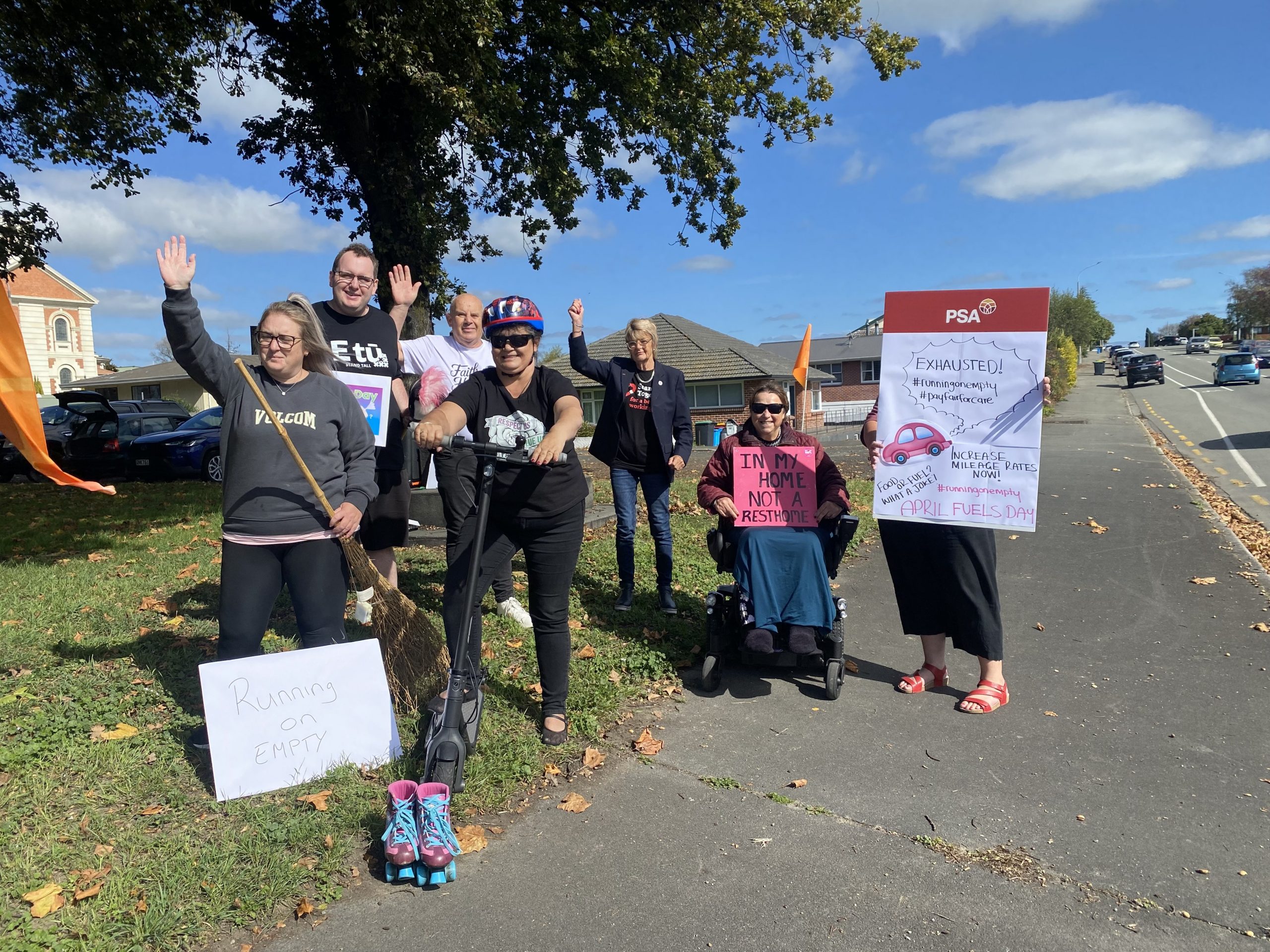
Broomsticks, hobby horses, scooters and skates . . .
These are all of the transport options that local support workers are eyeing up, as petrol prices soar sky high.
Home support workers who are being slammed by rising fuel costs rallied on April 1 to call on the government to urgently increase the mileage allowance.
While last week’s ‘‘April Fuels Day’’ rally on the corner of North St and Craigie Ave had a small turnout, co-organiser Camella Ross said it was simply because workers were too strapped for time and petrol to attend.
A day later, on April 2, the government announced an extra 30% boost to mileage rates for home and community support workers.
Health minister Simeon Brown said the raise would take mileage rates from 63.5c to 82.5c per kilometre, which would help offset the cost of rising fuel prices.
Mr Brown said the increase would remain in place for up to 12 months, or until the price of 91 octane petrol fell below $3 per litre for four consecutive weeks.
‘‘It will apply to home and community support workers who work for providers contracted to Health New Zealand, Ministry of Social Development, and ACC.’’
In a press release, a spokesperson for the union E tū said, ‘‘At 82.5c per kilometre, the new rate is still well below the IRD’s Tier 1 rate of $1.17 per kilometre for petrol vehicles. The increase is also temporary, with no indication of when it will be reviewed again.’’
Local support worker Sarah Willis attended the rally, and said previously her car cost $130 to fill from empty, however now it cost $220.
She started her day by travelling to Pleasant Point to visit clients there.
‘‘I go through a tank a week.’’
Miss Willis said while the increase was still not going to cover what they used, or help maintain their vehicles, it was a start.
‘‘Anything at the moment is better than what we were getting.’’
Miss Willis was earning $25 an hour.
She said with two teenage daughters at home and paying $600 a week in rent, the constantly rising prices were almost breaking her.
There were multiple factors which were making her job increasingly difficult, but the oil crisis was the ‘‘icing on the cake’’.
Her job depended on her car, with her tyres and servicing all paid by herself.
She had not thought about where she would draw the line.
‘‘I feel for our clients.
‘‘We — and our families — make sacrifices so our clients can stay comfortably in their own homes.’’
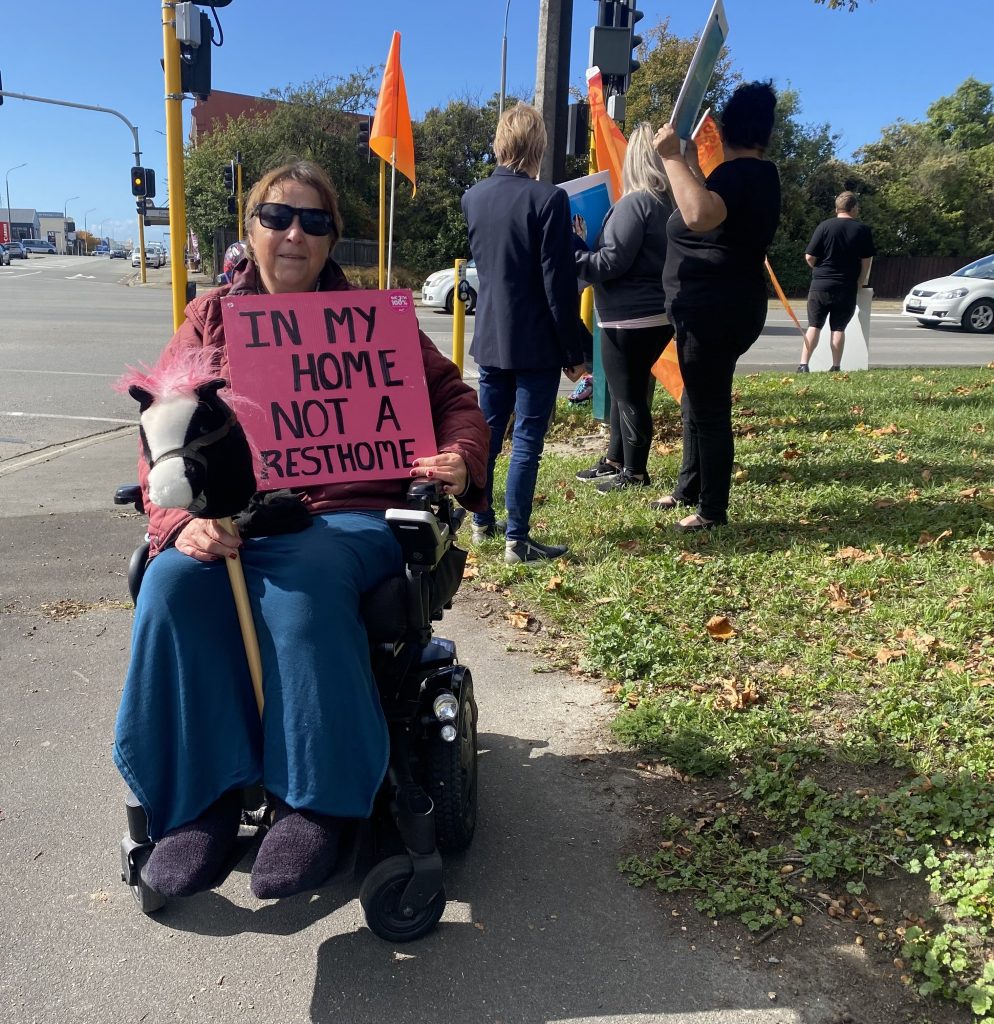
Cynthia Bailey attended the rally with her beloved hobby horse Bruce.
She said it was because of the care of local support workers that she was able to continue living independently in her own home.
And being at home meant she was able to remain a part of her community.
She said her personal support workers were her ‘‘rock’’ and became like family.
‘‘They are the masters of so many things.’’
Ms Bailey said she tried to advocate as best she could.
‘‘What is the alternative? There are not enough homes. And who is going to staff them?’’
She said some people did not have family, or had dysfunctional families.
Ms Bailey said support workers were the frontline in the community and yet they were treated like the ‘‘poor cousins’’ of the healthcare sector.
‘‘What personal sacrifices have MPs made, lately?’’ Ms Bailey asked.
‘‘Would they donate a third of their pay to put into the coffers?’’
Another rally goer, Robert Westaway was living with four separate cases of stage four cancer.
‘‘I’ve had it all.
‘‘All my friends are now dead.’’
He was attending the rally on their behalf.
He said his condition was ‘‘beyond’’ painful, but his support workers were the angels on his shoulder.
‘‘I will not go silently into the night.’’